
US Dollar Fuelled Higher by Inflation Fears
The US dollar has climbed back toward the 99 level as the US-Iran conflict escalates and inflation worries grow. Here is how oil, gold, equities and the Fed outlook are reacting.
The US dollar has found fresh momentum this week, with the DXY climbing back to the 99 level as the US-Iran conflict escalated. Geopolitical tension has once again acted as a powerful magnet for safe-haven flows into the world’s reserve currency, and inflation fears have added further fuel. For traders, the move is about more than headlines. It changes how the market prices the path of US interest rates.
Why the US Dollar Is Gaining Ground
Oil prices were the immediate catalyst. Markets are now questioning whether the mid-year rate cuts that had been anticipated remain realistic. A delayed or shallower easing cycle would keep real yields elevated, which provides additional support for the dollar.
The risk of supply disruptions through the Strait of Hormuz has rattled risk assets, but it has also benefited the dollar. Serious questions are now being asked about how dovish the Federal Reserve can afford to be if inflation moves swiftly higher in response to the Middle East conflict. You can review the central bank’s own communications on the Federal Reserve website.
The Energy Cost Channel
The spike in crude has revived concerns that energy costs will feed through to transportation, manufacturing and consumer prices. These are the same areas that have kept core inflation stubborn. Oil shipments through the Strait of Hormuz account for approximately 20% of global crude supply, and China is Iran’s major export market.
Together, shortage concerns and the risk to economic growth have dealt risk assets a blow. When energy costs rise, markets tend to reprice expectations for inflation and rates at the same time. That double repricing is why the US dollar has found buyers.
Why Rate Expectations Matter Most
For currency traders, the key question is not whether oil is high today. It is whether oil stays high long enough to change the Fed’s timing. A firmer inflation path pushes back the date of the first cut, and that keeps yields attractive for dollar holders.
Naval Support Offers Only Partial Relief
Trump’s offer of US naval support for shipments through the Strait, along with insurance support, pulled crude prices off their overnight highs. However, with Middle East energy infrastructure being targeted, the upside bias in oil prices is expected to remain unless the conflict de-escalates.
In practical terms, the announcement reduced the immediate panic but did not remove the underlying risk. Shipping costs and insurance premiums can stay elevated even when security measures are in place, and that keeps energy-linked inflation in the conversation.
Gold Caught Between Safe-Haven Demand and a Firm Dollar
Gold has had a frustrating week. It is caught in a tug-of-war between resurgent safe-haven demand and a US dollar that refuses to give ground. As tensions escalated, with fresh US-Iran naval incidents in the Gulf and warnings around the Strait of Hormuz, investors once again turned to gold as a classic hedge against geopolitical risk.
The dollar’s surge has curtailed that advance. The metal is also being held back by the now-murky US interest rate outlook, since higher-for-longer rate expectations make non-yielding assets like gold less attractive.
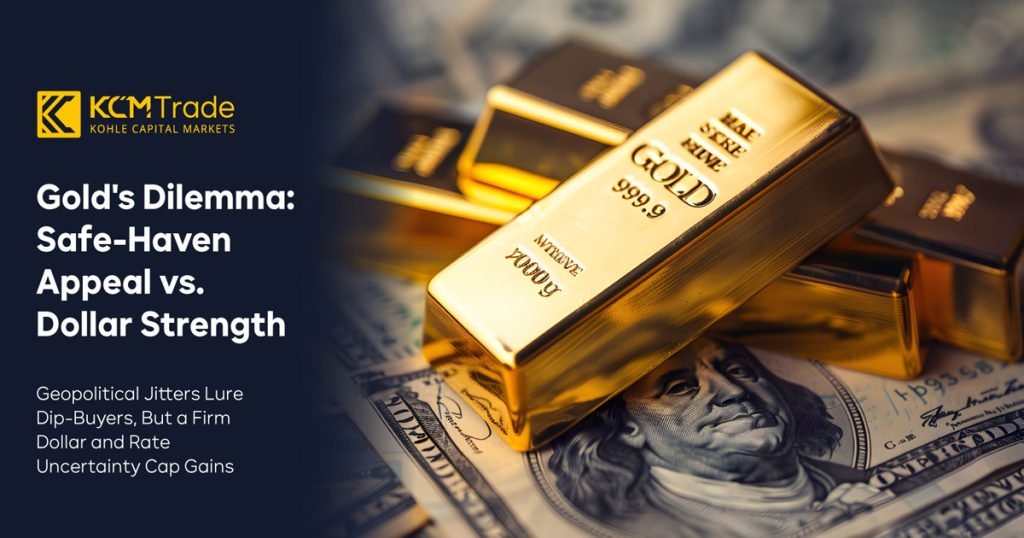
With the conflict still raging and traders lacking clear answers about its scope and duration, gold should be able to keep finding buyers looking for a defensive asset. Bargain hunters stepped in after the overnight slide, and prices are now once again tracking higher. For traders who want to understand how gold trades against the dollar, our review of spreads and leverage for XAU/USD trading explains the cost side of the trade.
Key Gold Levels to Watch
| Level | Price | What to watch |
|---|---|---|
| Support | $4975 | Area where buyers have recently stepped in |
| Resistance | Around $5350 | Upper level to watch if the rebound continues |
A clean break below the support zone would suggest the bargain-hunting bounce has run out of steam. A sustained move through the resistance area would signal that safe-haven buyers are back in control.
Equities Turn Defensive
Stocks have turned lower this week as the escalating US-Iran conflict injected fresh geopolitical risk into an already cautious market. Growth-oriented names in tech and consumer discretionary bore the brunt as investors rotated toward safe havens like the US dollar.
Risk appetite has evaporated as headlines from the Gulf overshadowed solid earnings. The threat of supply disruptions through the Strait of Hormuz has been enough to tilt sentiment defensive. Markets dislike uncertainty, and this conflict is delivering plenty of it.
What to Watch Next: US Payrolls and the Conflict
US Non-Farm Payrolls (NFP) data is normally the highlight of the month for markets. In this environment, however, it may play a backseat role to the conflict in the Middle East.
The data still matters. An upside surprise of more than 100k could further raise doubts about the Fed’s ability to cut rates. A particularly weak reading could intensify growth and stagflation fears, with traders already on edge. The consensus figure cited in the original analysis was +60k for February, so check the latest release and consensus before drawing conclusions from any headline number.
How Scenarios Could Play Out
- Upside surprise above 100k: raises doubts about the Fed’s ability to cut rates, which supports the dollar
- Very weak reading: amplifies growth and stagflation fears, creating a mixed outlook for the dollar and gold
- De-escalation: likely to lead to a rebound in risk assets and less demand for safe havens
- Escalation or broadening of the conflict: likely to create further market tumult
Headlines from the war will be the biggest determinant for risk assets. For more on managing exposure when markets are this volatile, read our guide to forex risk management strategies, and browse our forex analysis section for ongoing market commentary.
Final Take
The US dollar is being pulled higher by three forces at once: safe-haven demand, oil-driven inflation worries and doubts about how quickly the Fed can ease. Gold and equities are caught in the crossfire. Until there is clarity on the conflict, the payrolls report and the rate outlook, expect volatility to remain elevated.
FAQ
Why is the US dollar rising during the US-Iran conflict?
The dollar is attracting safe-haven flows as geopolitical tension rises. Oil-driven inflation fears also reduce the likelihood of fast rate cuts, which supports the currency.
What is the DXY?
The DXY, or US Dollar Index, measures the value of the US dollar against a basket of major currencies. A move back to the 99 level indicates broad dollar strength.
How does oil affect the US dollar?
Higher oil prices can feed into transportation, manufacturing and consumer prices, which keeps inflation elevated. That can delay rate cuts and keep real yields high, supporting the dollar.
Why does gold struggle when the dollar is strong?
Gold is priced in dollars and pays no interest, so a firmer dollar and higher-for-longer rate expectations tend to weigh on it. Safe-haven demand can offset this, creating the tug-of-war seen this week.
What is NFP and why does it matter?
Non-Farm Payrolls measure how many jobs the US economy added or lost in a month. Strong or weak readings can change expectations for Fed policy, which is why traders watch them closely.